
The Agent Phone: India’s small sellers need a phone that proves who is calling
Every day, lakhs of small-team sellers in India pick up a phone and dial a stranger, using devices built for everyone except them. A purpose-built, made-in-India “Agent Phone” could close the trust gap, killing their calls, cutting their costs, and giving India a device category to sell to the world.
A trust problem hiding in plain sight
Direct Selling Agents (DSAs), insurance advisors, mutual fund distributors and property brokers run much of India’s retail selling over the phone. Yet the person they call has no way to tell a genuine loan agent from a fraudster reading off a stolen lead list.
The cost of that doubt is high. Indians reported losses of about ₹19,813 crore across 21.8 lakh cheating-related complaints in 2025, per I4C data, and many of those frauds start with a call. Genuine agents pay the price: their calls go unanswered.
Regulators have acted on the network side. TRAI has set aside the 140 series for promotional calls and the 1600 series for service calls, and caller-name display (CNAP) became mandatory from 1 November 2026. But the device in the agent’s hand is still an ordinary consumer smartphone, mixing a personal number, personal apps and the employer’s customer data. That is the gap.
Who we are talking about
This is not about enterprise contact centres. Banks, insurers, edtech firms, BPOs and large gig telecalling platforms already run dialers, recording and CRM on enterprise systems. The gap sits with the independent agent and the small DSA firm of up to 50 people, which carries the same compliance duties but has none of that stack.
Techarc estimates about 21.5 lakh such sellers in India, within a range of 17 to 26 lakh. Independent insurance agents are the largest group: life insurers alone had 33.09 lakh individual agents in June 2026, of whom we count only those who prospect by phone. Mutual fund distributors number 3.40 lakh, and RERA-registered property agents crossed 1.05 lakh in 2025.
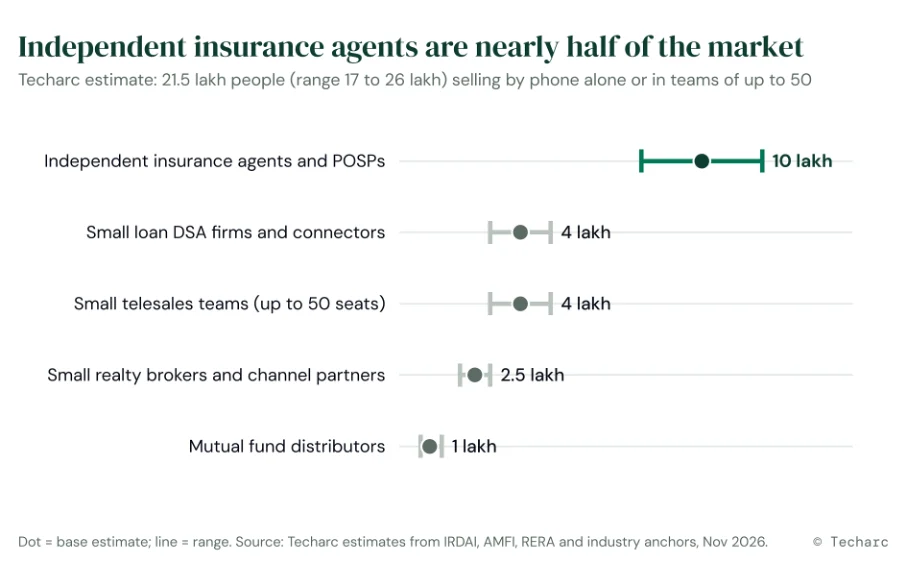
FIGURE 1: INDIA’S SMALL-TEAM PHONE-SALES MARKET BY SEGMENT
Why today’s smartphone fails them
An agent needs three things: calls, messages and a reliable record of each call. The consumer smartphone gets all three wrong.
- Recording is broken. Native call recording is patchy across brands, and third-party recorders have been squeezed out. Firms have no audit trail; customers get no clear notice.
- Data walks out of the door. Lead lists and call logs sit on a personal phone. When the agent leaves, the data goes too, and leaked lead lists feed the very scams that make genuine calls go unanswered.
- The number proves nothing. A personal 10-digit number says nothing about who is calling. Even regulated series struggle: Truecaller says over 51 million calls a day from the 140 and 1600 series go unanswered.
- Agents pay for what they never use. Multiple cameras and fast chips add cost, and rising memory prices make even entry phones dearer. An agent making 150 calls a day needs battery life, a readable screen and quick typing.
The Agent Phone: less phone, more trust
The Agent Phone does three jobs well and nothing else. The hardware is deliberately plain: a physical QWERTY keyboard for notes and follow-ups, a screen about half the height of a regular phone with large type, a 5,000 to 6,000 mAh battery, 4G VoLTE with eSIM only, a secure element, and little memory or storage.
Its real value is the bond between device, number and organisation. Today’s 140 and 1600 series identify a category of caller. An agent series would identify an accountable person on an authorised device:
- A number from a dedicated agent series works only as an eSIM on an authorised Agent Phone, verified by the device’s secure element.
- An Agent Phone accepts only agent-series numbers.
- Provisioning needs two keys: the operator issues the number, and the DSA firm or the bank, insurer or AMC it works for approves the agent. Either can revoke it instantly.
- CNAP shows the customer a verified name, such as “Ravi Kumar, authorised agent, [Insurer]”.
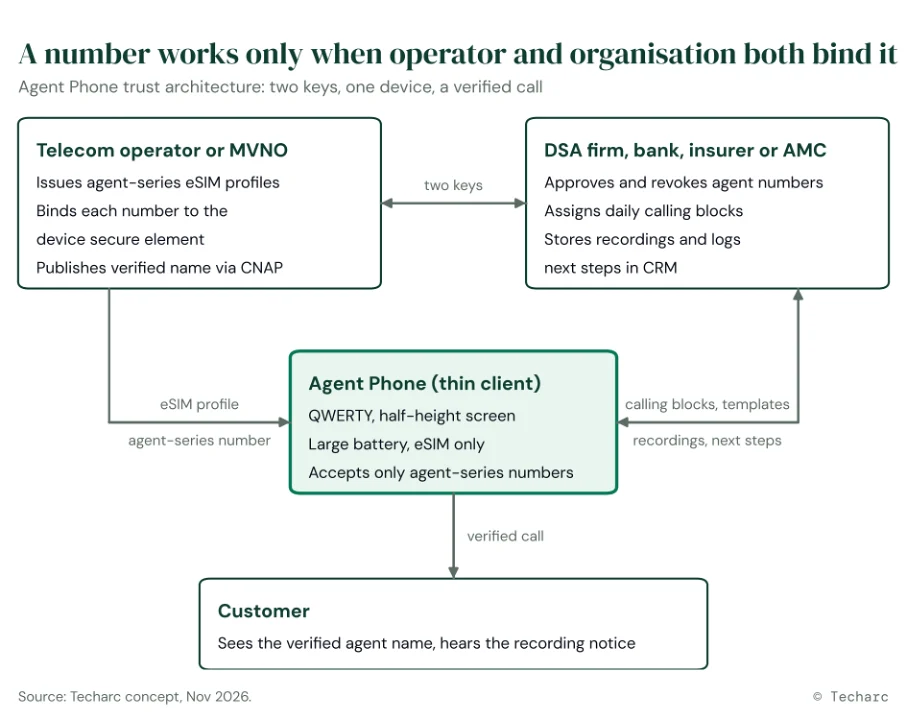
FIGURE 2: HOW THE AGENT PHONE BINDS NUMBER, DEVICE AND ORGANISATION
The phone is a thin client. Every call opens with an automatic recording notice and streams to the organisation’s cloud, so nothing sits on the device. Supervisors assign daily calling blocks remotely; the agent sees a name and a call button, not an exportable contact list. After each call, the agent types the outcome and next step, which syncs to the CRM. Links and brochures go out over WhatsApp Business, RCS or India’s own Arattai, only from an approved library.
The economics work for small firms
Stripped of what agents never use, an Agent Phone could cost ₹6,000 to ₹8,000, about half of what many agents spend on a work-capable smartphone. It can also be leased for about ₹200 to ₹300 a month and netted against commissions.
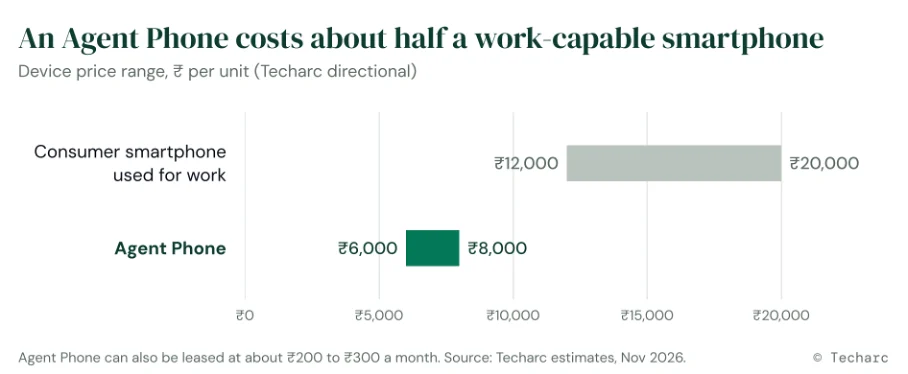
FIGURE 3: DEVICE PRICE RANGE, CONSUMER SMARTPHONE VERSUS AGENT PHONE
Three more gains follow. Because the number belongs to the organisation, a phone returned by a departing agent can be wiped and re-issued, which matters when life insurers alone terminated 6.98 lakh agents in 2023-24. A thin client needs little memory, shielding it from rising memory prices. And a 10- or 30-seat DSA firm gets a contact centre’s controls (dialing, compliant recording, CRM) for the price of an entry phone and a monthly fee.
The biggest gain is harder to price: if customers trust an agent-series call, they pick up.
Operators, an MVNO, and a made-in-India build
Two delivery models fit. In the first, Airtel and Jio, which already run enterprise mobility, DLT platforms and CNAP, sell the agent series as a per-seat bundle of device, number and cloud. They can tie it to their international plans, so an Indian developer’s agent selling to NRIs in Dubai keeps the same verified number abroad.
In the second, a dedicated trust MVNO owns the whole stack under one strict rule: its numbers work only on its devices, and its devices accept only its numbers. That makes it a neutral utility that many small DSA firms and their principals can share.
C-DOT is the natural anchor for the R&D. It already builds India’s telecom trust plumbing, including the device registry behind Sanchar Saathi and BSNL’s CNAP platform. It could define the agent-series standard, the eSIM binding and a reference design, then work with Indian firms on design, software, manufacturing and cloud wherever possible. Some parts, such as chipsets, memory and displays, will still come from the global supply chain.
How big is the opportunity?
In Techarc’s base case, with 30% of the addressable 21.5 lakh adopting about five years after launch, India would need about 2.6 lakh Agent Phones a year. A mandate requiring the agent series for human sales calls could lift that to 5.2 lakh.
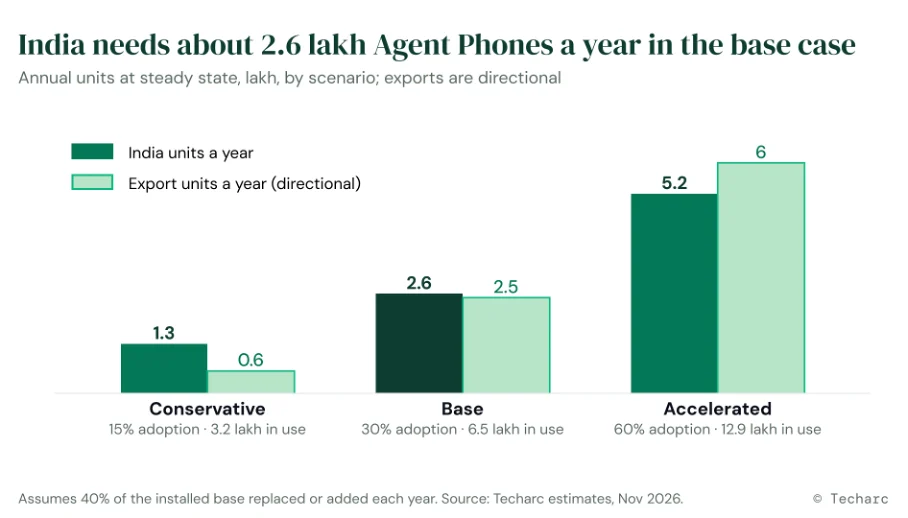
FIGURE 4: ANNUAL AGENT PHONE DEMAND BY SCENARIO, INDIA AND EXPORTS
The recurring service, at roughly ₹500 per seat a month, is worth about twice the hardware: around ₹390 crore a year against ₹180 crore for devices in the base case. That gives operators and an MVNO a reason to lead.
Exports could roughly double the volume. Southeast Asia, South Asia, Africa, the Gulf and Latin America all run large phone-sales workforces and all face rising scam calls. India would export not just a phone but a working model of device, number-binding standard and cloud service, proven at Indian scale and Indian prices. Airtel’s African footprint offers a ready channel.
What it means
For customers, it means fewer anonymous sales calls and a verified name on every agent call. For small DSA firms, it means auditable calls, lead data that stays in-house and devices that survive churn. For OEMs, it is a focused category that rewards cost discipline over spec races, which suits Indian brands such as Lava with feature-phone and enterprise experience, and EMS firms such as Dixon. For operators, it is high-trust recurring revenue. For government, it is a device-level complement to TRAI’s series and CNAP, and an exportable digital-trust standard.
The smartphone industry measures progress in cameras, chips and AI. India’s small-team sellers need the opposite: a phone that does less, costs less and proves more about who is calling. India can design it, build it and sell it to the world.
Workforce sizes, adoption, prices and export volumes are Techarc directional estimates built from public anchors, not a census.
