
SK hynix’s record quarter is the bill India’s phone buyers are paying
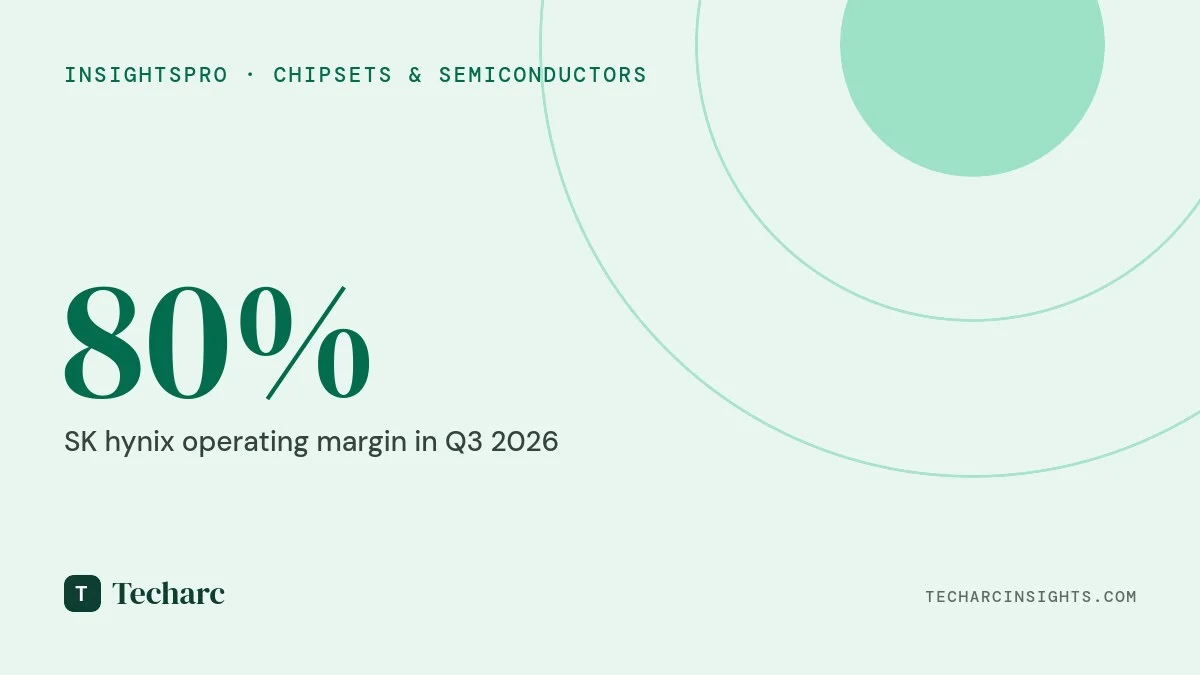
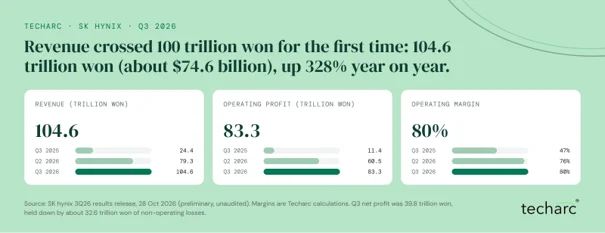
SK hynix earned an 80% operating margin in Q3 2026 (Jul–Sep) on revenue that more than quadrupled in a year, and says its DRAM and HBM output is “effectively sold out” through 2029. Those are the same memory prices that are pushing up smartphone and laptop costs in India. SK hynix itself expects PC and smartphone shipments to fall because of rising memory prices. The AI data centre is now outbidding the consumer device for memory, and that will shape India’s device market for the next three years.
Key takeaways
- Revenue crossed 100 trillion won for the first time: 104.6 trillion won (about $74.6 billion), up 328% year on year.
- DRAM prices rose by a high-20% rate and NAND by a mid-20% rate in a single quarter.
- Long-term agreements now cover more than half of capacity for 2027 and 2028, with prices that move only within agreed ranges.
- About 100 trillion won goes back to shareholders for 2026. The profits are not being turned into enough new capacity to bring prices down soon.
The quarter in brief
Sold out to 2029: the AI data centre outbids the phone
The growth came from price, not volume. Server DDR5 sales rose sharply, HBM4 shipments began in earnest, and in NAND, sales of 321-layer enterprise SSDs grew. Executives said DRAM and HBM capacity is effectively sold out through 2029 once secured long-term agreements and customer talks are counted, and that tight supply could last until 2030.
The company was candid about the cost to consumer devices: its outlook says PC and smartphone shipments will fall because of rising memory prices and supply shortages. A year ago, PCs and mobile took about a quarter of SK hynix’s DRAM revenue. That share is now shrinking as AI servers absorb what consumer devices give up.
Why capacity won’t fix prices soon
SK hynix is ramping its M15X fab and moving to its 1c DRAM process, and says it will invest more in 2027. But it is also returning about 100 trillion won to shareholders for 2026: at least 30 trillion won in dividends and at least 60 trillion won in buybacks and cancellations. When the market leader prioritises returns and locks in multi-year contracts, buyers should plan for high memory prices through 2027, not a quick correction.
The India lens
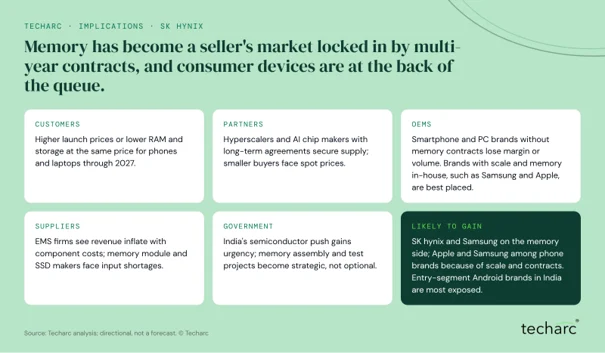
India’s smartphone market lives in the entry and mid segments, where memory is a large share of the bill of materials and brands have the least room to absorb cost. Three effects follow:
- Specs freeze or fall: brands hold RAM and storage flat, or cut them, at the same price point rather than raise prices.
- Prices rise at launch: successor models launch above the predecessor’s price, which Techarc’s price tracking already shows in 2026.
- Contract manufacturers inflate: EMS revenue rises with component cost without a matching rise in profit, as our Dixon viewpoint showed.
The beneficiaries in India are the few players with memory exposure on the supply side, chiefly Samsung, which sells both memory and phones.
Implications
Techarc view
The smartphone industry spent a decade treating memory as a spec to add cheaply. SK hynix’s quarter says that era is over until at least 2028. For India, that means the trading-up story will be partly forced: buyers pay more because components cost more, not only because they want more. Brands that redesign software to need less memory will gain an edge that spec sheets will not show.
What to watch
- DRAM contract prices in Q4 and whether the rise slows.
- Whether SK hynix’s Q4 shows volume growth as prices plateau.
- RAM and storage configurations of India’s festive and early-2027 launches.
Sources
Company filings
- SK hynix 3Q26 financial results release (28 Oct 2026)
Supporting coverage
