
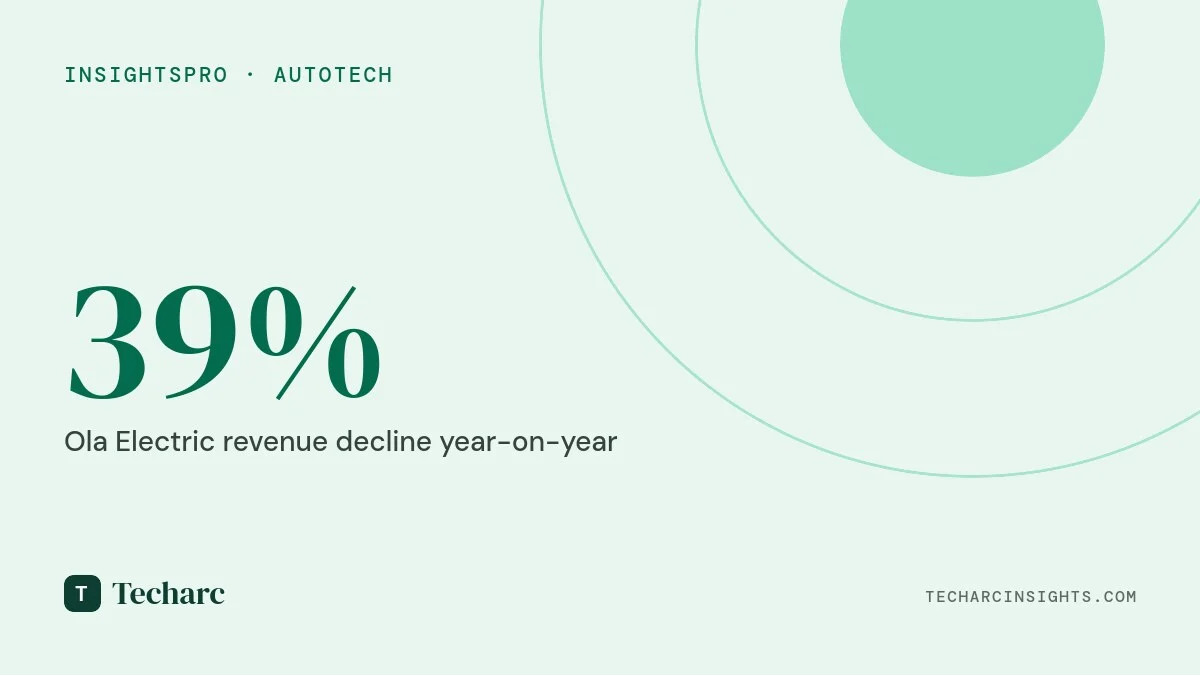
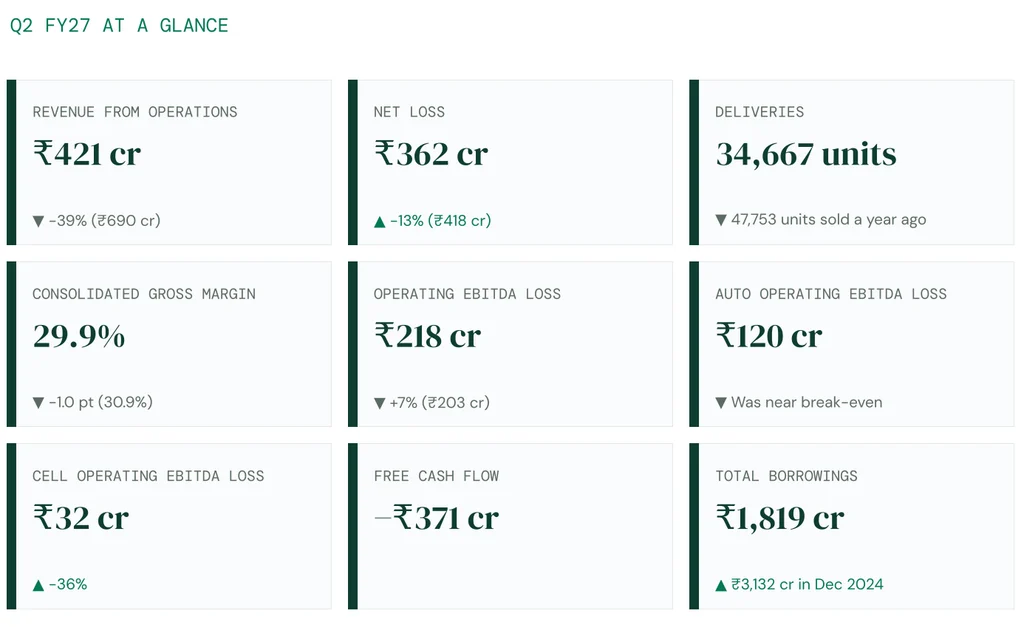
Ola Electric reported Q2 FY27 (Jul–Sep 2026) on 12 Nov 2026. Revenue fell 39% to ₹421 cr on 34,667 deliveries, while the net loss narrowed 13% to ₹362 cr.
What the numbers say
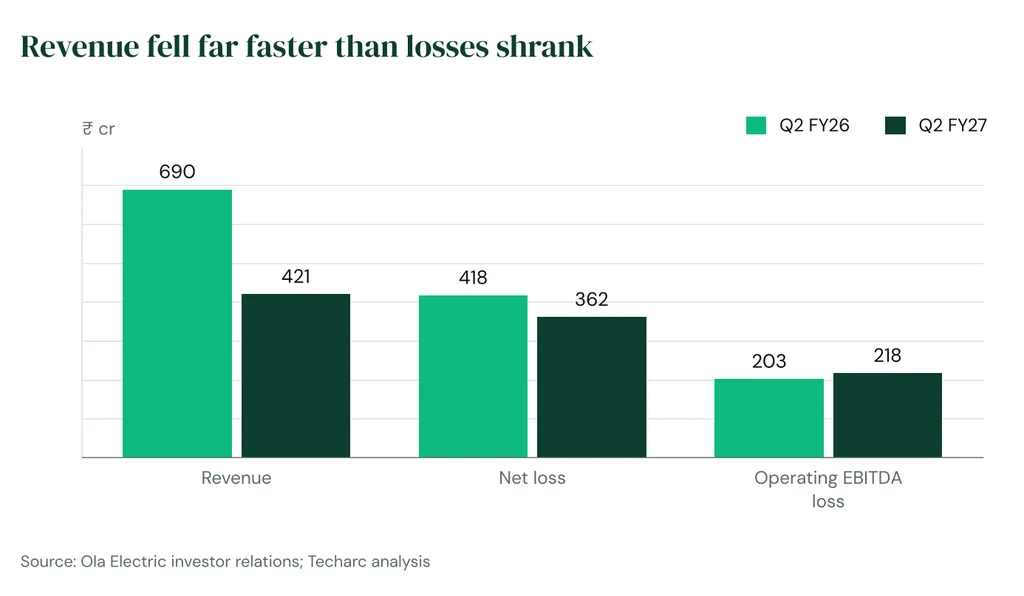
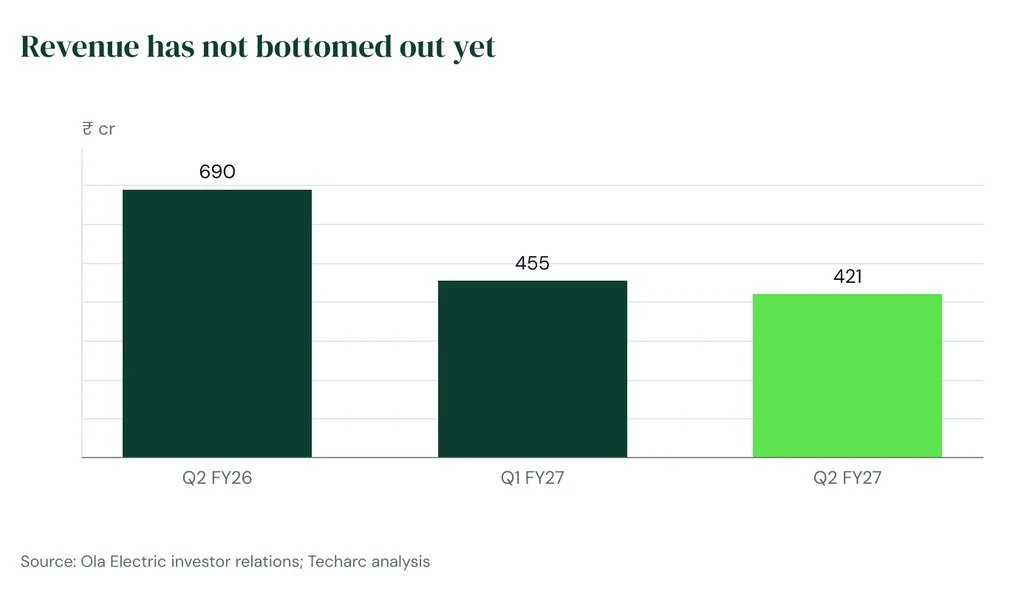
The smaller loss is a cost story, not a growth story. Total expenses fell 28% to ₹639 cr, faster than revenue could recover. Revenue also slipped 7% from ₹455 cr in Q1 FY27, so the decline has not bottomed out.
The auto business moved the wrong way. A year ago management called auto EBITDA positive; this quarter it lost ₹120 cr. Operating EBITDA loss widened 7% to ₹218 cr, and the adjusted operating EBITDA margin was −58.5%. At 34,667 units, fixed costs are spread over too few scooters.
The balance sheet is the one clear gain. Borrowings are down to ₹1,819 cr from ₹3,132 cr in Dec 2024, and auto debt is just ₹337 cr. But free cash flow was −₹371 cr in one quarter, so the cushion is not deep.
Industry read: the e-2W market grows without Ola
India’s electric scooter market is growing, and Ola is the exception. In the same quarter TVS sold 186,186 e-2Ws, up 133%. Ather shipped 93,211 units, up 42%, and posted its first net profit of ₹1.26 cr.
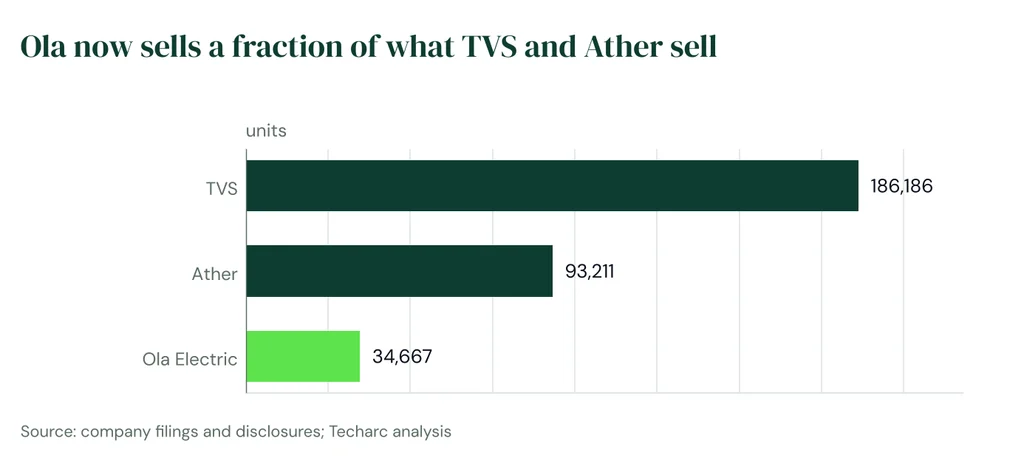
The gap is now structural. Ather sold about 2.7x Ola’s volume and booked ₹1,464 cr of operating revenue, roughly 3.5x Ola’s. TVS and Bajaj bring dealer networks and service reach that buyers trust. Ola’s direct-only model, once its edge, became a weakness on service and availability.
The winners share one trait: steady supply through dealers, and products that earn a higher price. Ather’s average realisation rose 14.6% to about ₹1.57 lakh per unit. Ola is still competing mainly on price, with a gross margin it expects to fall further.
Techarc view
Ola’s pivot is the right move, but it is a repair job, not a path back to leadership. Switching to dealers admits that the direct model failed on service. It should cut operating costs, and management already guides to lower gross margin as dealers take their cut. More than 300 stores and 255 dealer partners were in place by 8 Nov.
The cell plant is the bigger long-term bet. The 6 GWh line reaching SCOD, with the ACC PLI now running to CY31, could lower battery cost over time. But NMC yields are in the mid-70% range, and cell revenue was just ₹3 cr this quarter. It will not rescue FY27.
In our view Ola must first prove it can sell at scale again through dealers. Management says demand is ahead of supply and targets about 25,000 units in December. That single month will show whether the pivot is working.
What to watch:
- December production against the 25,000-unit target
- Store count against 450 by Dec 2026 and 700 by Mar 2027
- Auto EBITDA loss trend as opex falls and gross margin dips
- NMC cell yields moving to the 80–85% target
Sources
- Ola Electric investor relations: Q2 FY27 metrics and shareholder letter
- Upstox: Ola Electric Q2 FY27 results
- Inc42: Ola Electric Q2 loss down 13% to ₹362 cr
- YourStory: Ola Electric Q2 FY26 results (year-ago units)
- Autocar Professional: Ather Energy Q2 FY27
ABOUT TECHARC
Techarc is an independent technology market research, analytics, and consulting firm based in India, covering consumer devices, telecom, auto-tech, and the e-commerce/D2C ecosystem across three pillars — Analytics, Research, and Consulting. techarcinsights.com
