
Applied Materials Q4 FY26: AI turns the tool queue into India’s problem
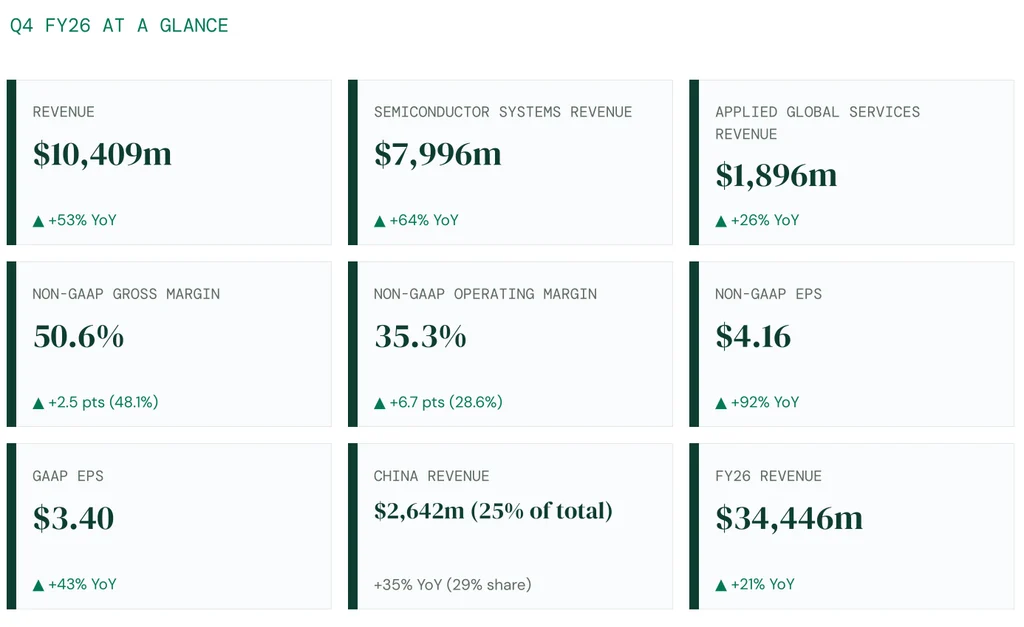
Applied Materials’ Q4 FY26 (Aug–Oct 2026, quarter ended 25 Oct), reported on 12 Nov 2026, set a revenue record of $10,409m, up 53%. It guides Q1 FY27 to $11.1bn ± $0.5bn, with non-GAAP EPS of $4.35 ± $0.20.
What the numbers say
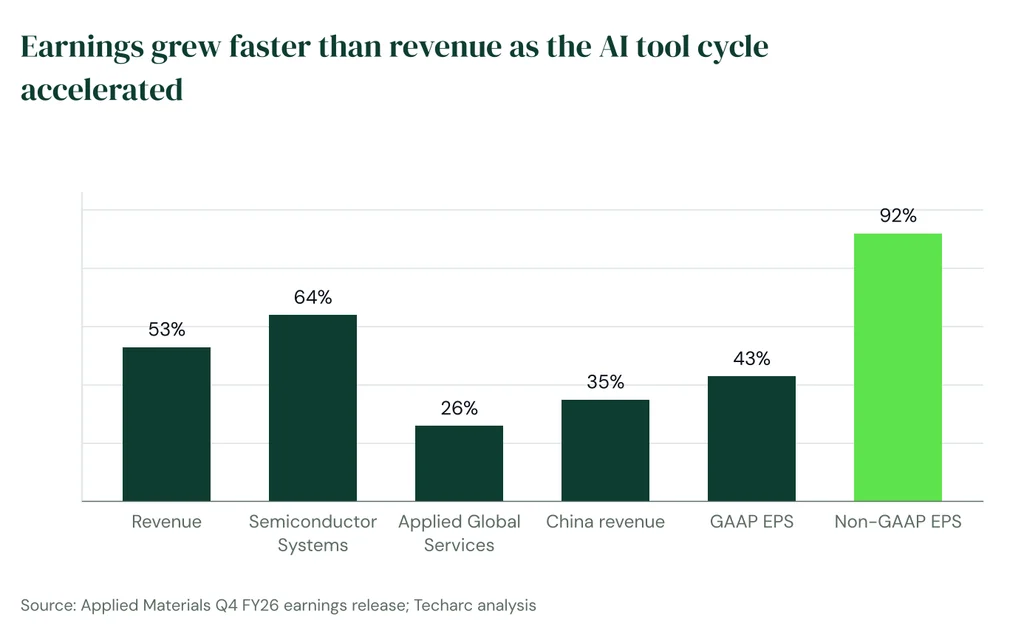
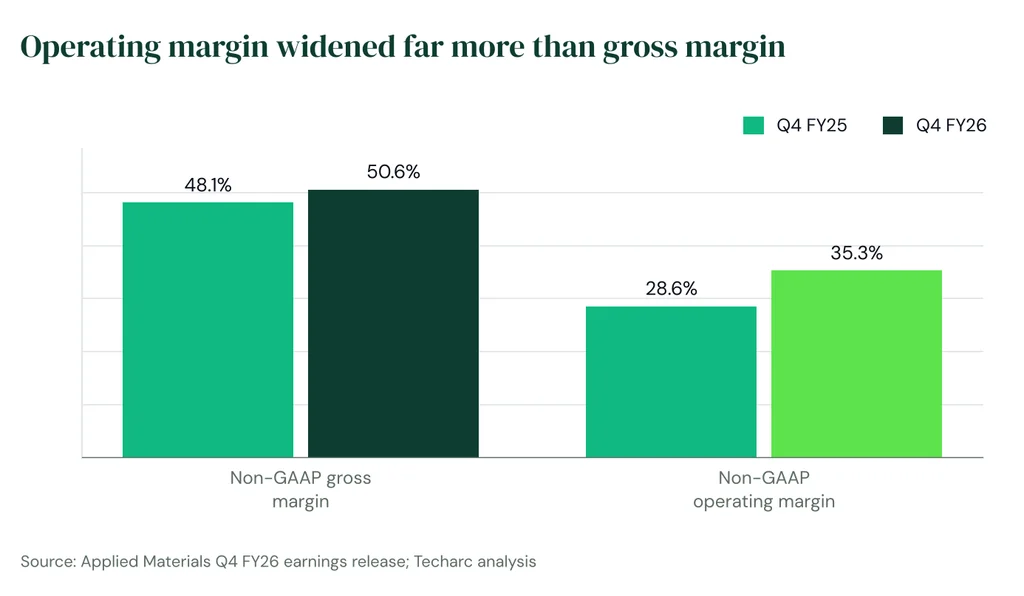
This is an AI-driven tool cycle, and it is accelerating. Semiconductor Systems revenue rose 64% to $7,996m. Full-year revenue grew 21%, so Q4 was far stronger than the year as a whole. The Q1 FY27 guide points higher again. The quality of growth improved. Non-GAAP operating margin rose 6.7 points to 35.3%, and non-GAAP EPS nearly doubled. Services grew 26%, a sign that the installed base is running hard
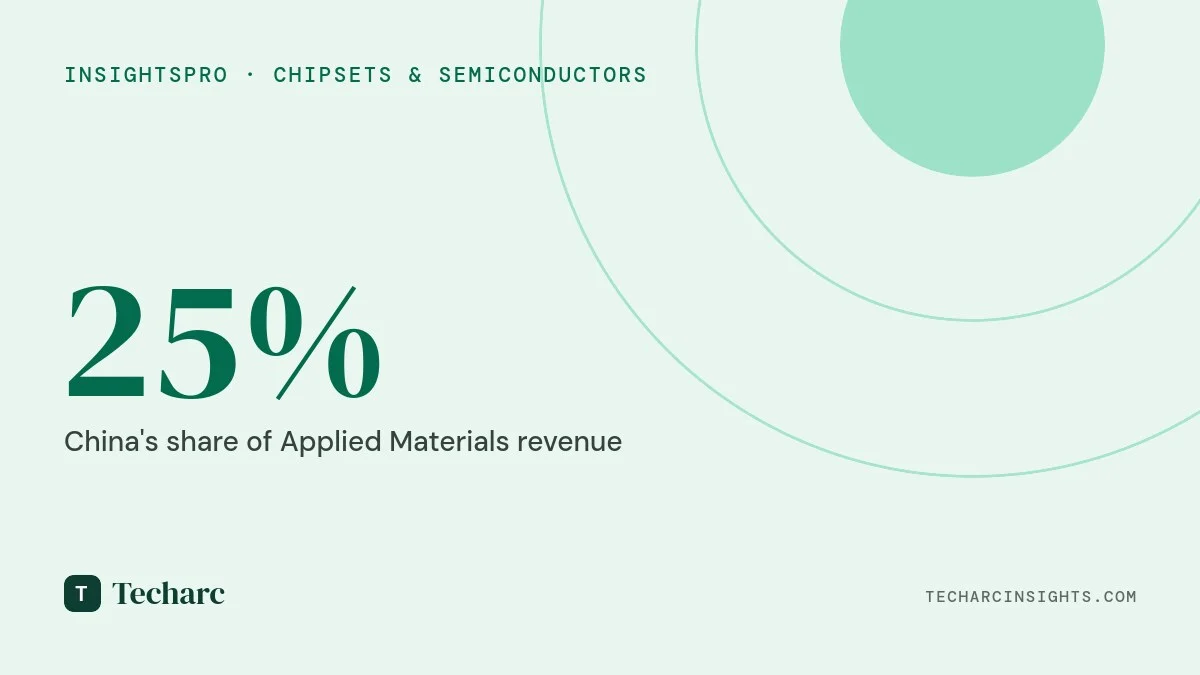
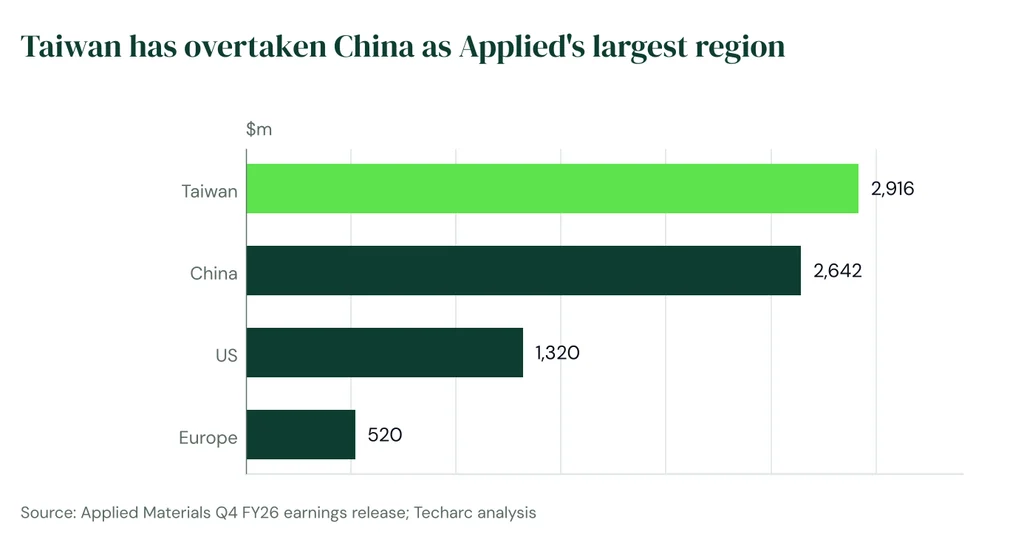
The customer map is shifting away from China. China revenue grew 35% to $2,642m but fell to 25% of the total, from 29%. Taiwan is now the largest region at $2,916m, or 28%. US revenue roughly doubled to $1,320m, and Europe more than doubled to $520m. New capacity is going where leading-edge logic, memory and advanced packaging for AI are built.
Industry read: India joins a crowded queue for tools
When equipment makers post records, lead times stretch for everyone else. The largest chipmakers place orders years ahead and get priority slots. A first-time fab with a mature-node plan competes with AI megaprojects for the same deposition, etch and inspection tools.
India’s projects sit at different points on this curve. Micron’s $2.75bn Sanand assembly and test plant began commercial production in February 2026. Tata’s Assam OSAT is in pilot runs, with commercial output now expected around early 2027. The ₹91,000 cr Tata-PSMC fab at Dholera is under construction, with commissioning now scheduled for 2028, against an earlier end-2026 aim.
Dholera is the exposed project; OSAT lines need far less frontier equipment. Dholera reportedly starts mostly at 90nm, where tools are less scarce, but a tight market still lifts prices and delays installation crews. Applied has local depth to help: in June 2023 it committed $400m over four years to a new Bengaluru engineering centre, with 500 advanced engineering roles.
Techarc view
Techarc reads Applied’s record quarter as a cost signal for India, not just a demand signal. The AI build-out has priority on tools, engineers and installation slots. Indian fabs will pay market prices in a seller’s market.
India’s OSAT-first path looks smarter in this light. Assembly and test plants are already shipping, while the first fab has slipped to 2028. A later start may even help Dholera if the tool cycle cools by then. But every year of delay keeps India importing the mature-node chips its auto and electronics makers need.
The Bengaluru centre is Applied’s best lever for India. Local engineering and service teams can shorten installation and ramp times, which matter more than list price.
What to watch:
- Applied’s China share, and whether it keeps falling below 25%
- Tool move-in dates at Dholera, and any further slip from 2028
- Commercial start at Tata’s Assam OSAT, now guided around early 2027
- New Indian fab approvals and whether they name tool partners early
Sources
- Applied Materials Q4 FY26 earnings release, SEC Exhibit 99.1 (12 Nov 2026)
- Applied Materials to invest $400m in India for new engineering centre (ThePrint)
- Micron begins production at $2.75bn Sanand plant (Inc42)
- India semiconductor plants: Assam, Jewar, Dholera status (eCorpIT, 7 Nov 2026)
ABOUT TECHARC
Techarc is an independent technology market research, analytics, and consulting firm based in India, covering consumer devices, telecom, auto-tech, and the e-commerce/D2C ecosystem across three pillars — Analytics, Research, and Consulting. techarcinsights.com
