
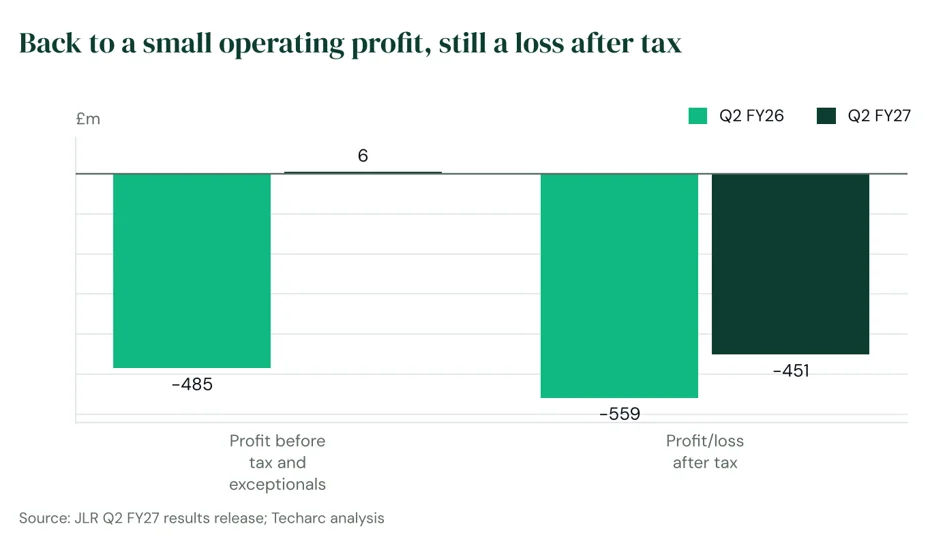
JLR reported Q2 FY27 (Jul–Sep 2026) on 13 Nov 2026. It returned to a thin operating profit, but restructuring charges pushed it to a loss after tax.
What the numbers say
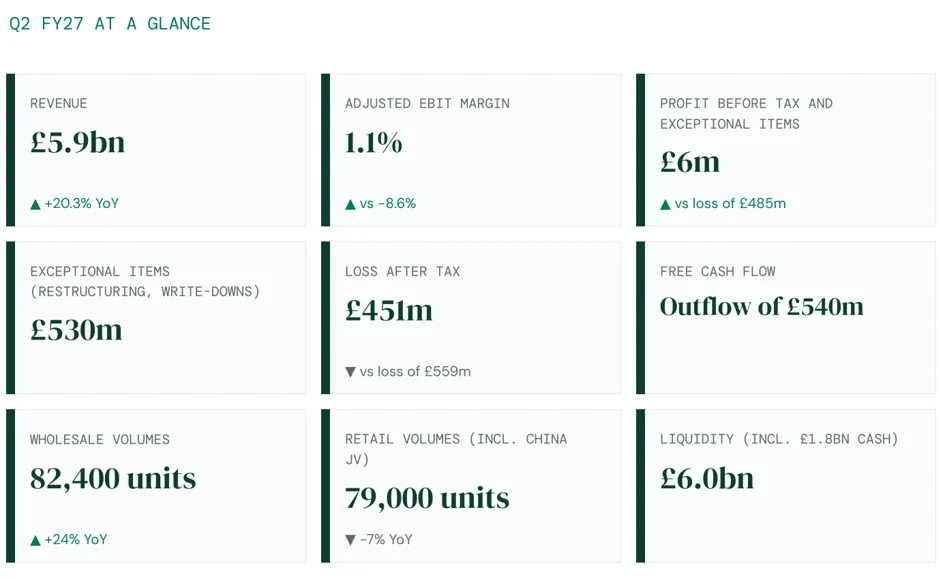
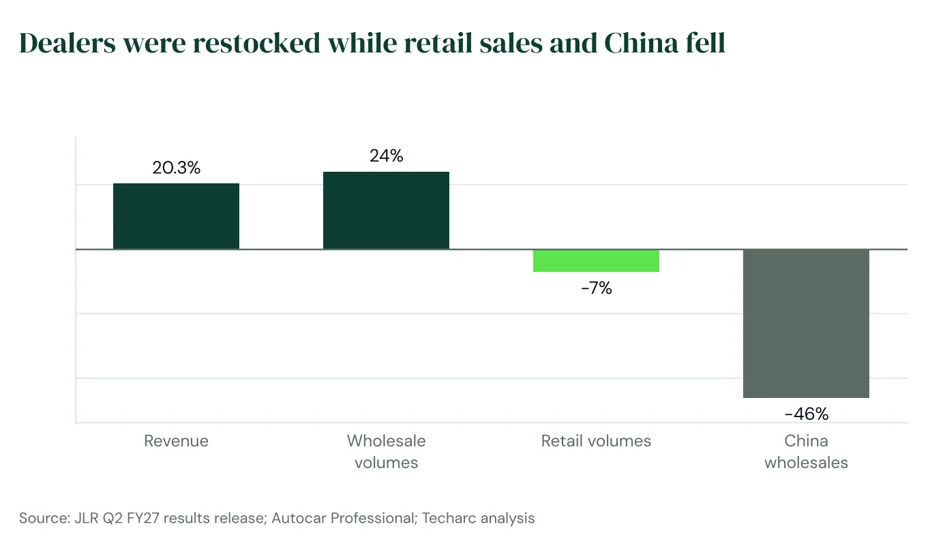
The 20% revenue jump is mostly a low base. A year ago a cyber attack shut JLR’s plants for weeks. Wholesales rebounded 24% to 82,400 units, but retail sales fell 7%. Dealers were restocked faster than buyers came back.
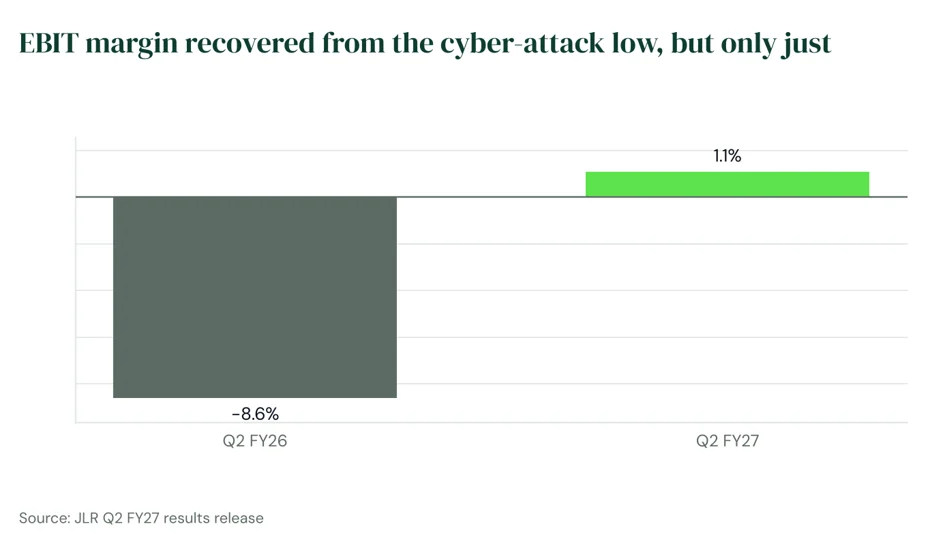
The operating recovery is real but slim. A 1.1% EBIT margin is far below the high single digits JLR earned before the attack. Profit before exceptionals was just £6m.
The £530m charge is the reset itself. It covers restructuring, separation costs and write-downs of projects JLR no longer plans to build. Cash burn of £540m in one quarter is heavy. JLR has cut FY27 guidance to a 2–3% EBIT margin and an outflow of about £1.25bn.
The region mix shows where the pressure sits. China wholesales fell 46% to 6,100 units. North America and the UK did the lifting. Range Rover and Defender made up about 90% of wholesales.
Industry read: luxury carmakers shrink to grow
JLR is not alone. European luxury brands face weak China demand, US tariffs and slower EV uptake. Most are cutting costs and trimming line-ups. JLR’s plan is sharper: lower its breakeven toward 300,000 units and save £1.7bn over two years.
The EV bet is now on the road. JLR launched the Range Rover Electric, Range Rover Sport Electric and Jaguar Type 01 this quarter. Deliveries start in early 2027. A Range Rover GT and an electric Defender follow next year. JLR has invested £11.5bn of its planned £15–18bn programme since 2024.
For India, JLR is a small but growing story. Tata already assembles the Range Rover and Range Rover Sport at its Pune plant. Local assembly cuts duty and lets JLR price closer to German rivals. India’s luxury car market is small, but buyers keep trading up to large SUVs. That suits a Range Rover and Defender-led brand.
Techarc view
JLR is choosing to be smaller and more profitable per car. That is the right call for a luxury brand losing ground in China. But FY27 is a cash-burn year, and the payoff depends on three EVs that customers have not yet driven.
The group angle matters for India. For years JLR’s cash helped fund Tata’s ambitions. With a £1.25bn outflow ahead, that flow has reversed for now. Tata’s India PV business must fund its own EV push. JLR’s £6.0bn liquidity means no rescue is needed, but there is no spare cash either.
Our view: the reset is credible on costs and weak on demand. The early-2027 EV deliveries will decide whether JLR’s luxury EV pricing holds.
What to watch:
- Order books and first deliveries for Range Rover Electric and Jaguar Type 01
- Retail volumes catching up with wholesales, especially in China
- Progress on the £1.7bn savings and the 300,000-unit breakeven
- More India assembly, which would cut prices for Indian luxury buyers
Sources
- JLR: Q2 FY27 results release
- Autocar Professional: JLR Q2 wholesales and retail by region
- Upstox: Q2 results live updates, 13 Nov 2026
- Multibagg: Tata PV Q2 FY27 India business figures
ABOUT TECHARC
Techarc is an independent technology market research, analytics, and consulting firm based in India, covering consumer devices, telecom, auto-tech, and the e-commerce/D2C ecosystem across three pillars — Analytics, Research, and Consulting. techarcinsights.com
