
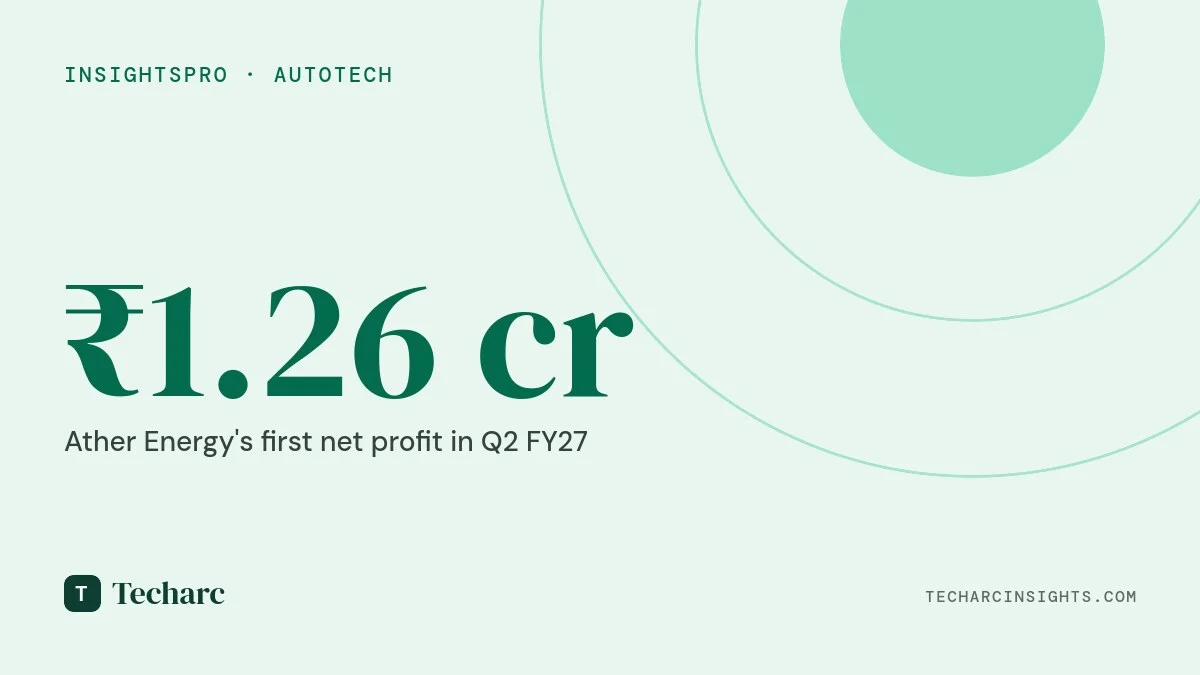
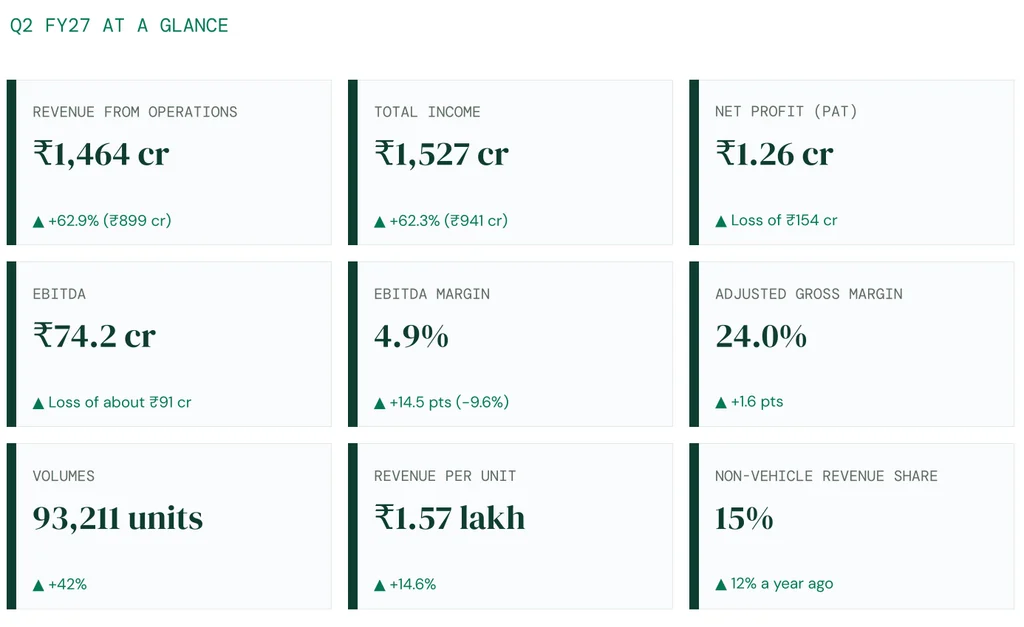
Ather Energy reported Q2 FY27 (Jul–Sep 2026) on 26 Oct 2026, with its first positive net profit of ₹1.26 cr. Operating revenue rose 62.9% to ₹1,464 cr on 93,211 units.
What the numbers say
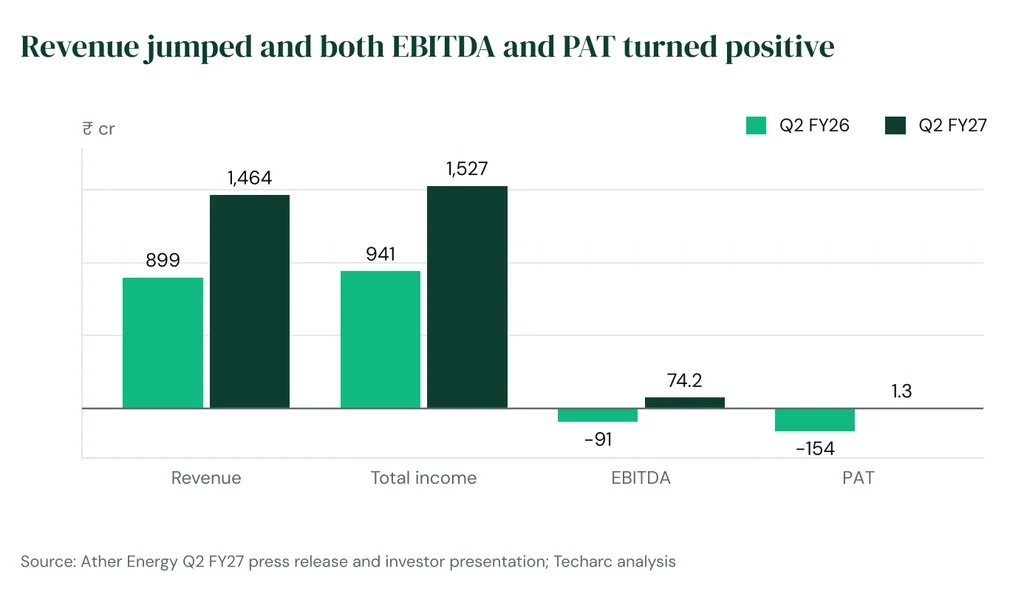
The profit is thin, but it is real operating leverage. Revenue grew faster than volume, 62.9% against 42%, because each scooter earned 14.6% more. EBITDA swung by about ₹165 cr in a year, and the loss of ₹51 cr in Q1 FY27 turned positive.
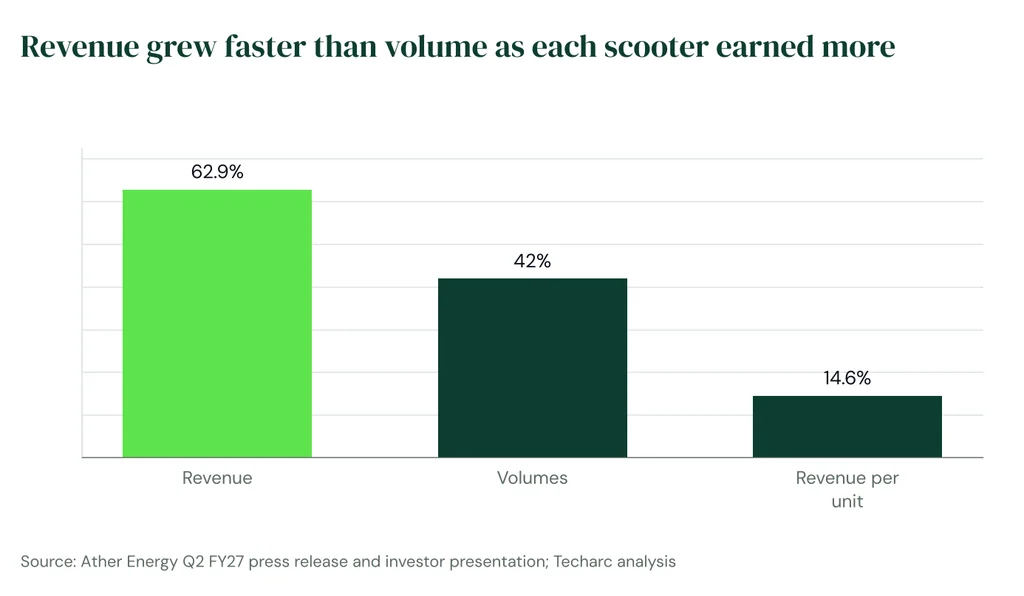
Pricing and mix did the heavy lifting. The weighted average ex-showroom price rose to about ₹1.64 lakh. And 94% of buyers took the AtherStack Pro software pack, lifting non-vehicle revenue to 15% of the total. That is an upmarket shift inside the family scooter segment, led by Rizta, which made up about three-quarters of FY26 volumes.
The margin is still fragile. Excluding other income, EBITDA margin was only about 0.8–1%. Commodity costs took 9.4 pts off gross margin since Q4 FY26, offset by price, cost and SKU actions. Some of those levers are temporary.
Industry read: scale and price discipline beat a price war
Ather’s profit shows that a pure-play e-2W maker can make money in India without a parent’s balance sheet. Until now, only TVS and Bajaj could absorb e-2W losses inside larger petrol businesses. TVS sold 186,186 e-2Ws in Q2 FY27, up 133%, so scale still sits with the incumbents.
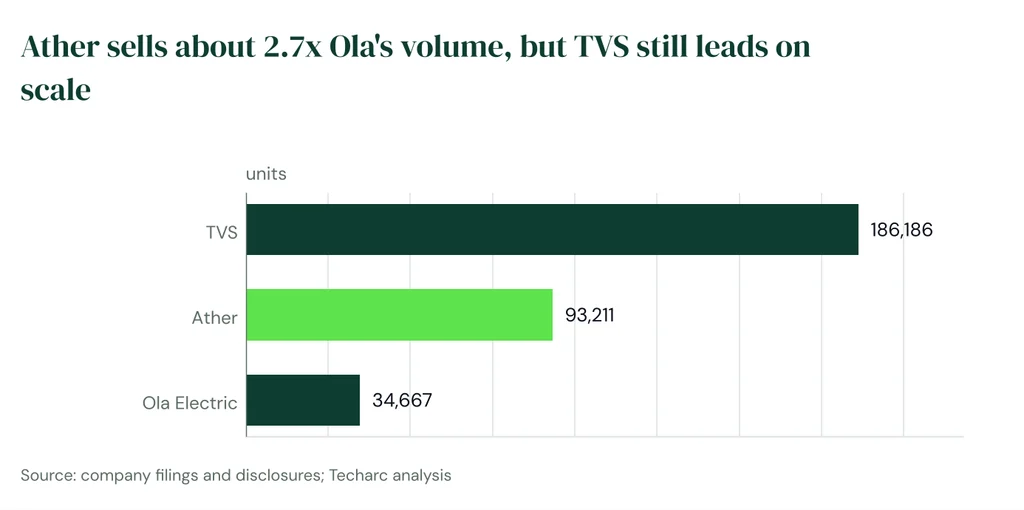
The contrast with Ola Electric is sharp. In the same quarter Ola delivered 34,667 units on ₹421 cr of revenue and lost ₹362 cr. Ather sold about 2.7x the units and earned about 3.5x the operating revenue. Ola chased volume on price; Ather held price and built trust in the family segment.
Demand is not the constraint for Ather. Pre-orders more than doubled to about 1.8 lakh and enquiries passed 10 lakh. Management estimates about 20,000 units a month of unmet demand. Hosur ran at 98% utilisation at peak, so supply decides the next few quarters.
Techarc view
This quarter proves the economics work, but not yet that they last. A ₹1.26 cr profit on ₹1,527 cr of income leaves no room for error. The core margin before other income is near 1%. One more commodity spike could push it back to a loss.
The real test is capacity. Ather plans ₹122 cr to lift annual capacity to 11.4 lakh units by Q2 FY28. Hosur goes from 4.2 lakh to 4.95 lakh units by Dec 2026. The AURIC plant in Chhatrapati Sambhajinagar starts phased output from Dec 2026. If supply arrives on time, operating leverage should do the rest.
Konarc is the bet to watch. It sells below Rizta yet should carry better unit margins, per management. If it scales across north and central India, Ather widens its base without diluting price. We see Ather as the benchmark that Ola now has to answer.
What to watch:
- Q3 FY27 EBITDA margin excluding other income, now about 1%
- AURIC trial output in Q3 FY27 and commercial start
- Konarc volumes after its first month of sales
- Whether Ather holds prices if commodity costs stay high
Sources
- Ather Energy Regulation 30 press release summary, 26 Oct 2026 (Arthneeti)
- Ather Energy Q2 FY27 investor presentation highlights (Investywise)
- Autocar Professional: Ather turns profitable in Q2 FY27
- Inc42: Ather cracks profitability in Q2
- Multibagg: Ather Q2 FY27 earnings call notes
- Autocar Professional: Rizta share of Ather FY26 volumes
- Inc42: Ola Electric Q2 FY27 results
ABOUT TECHARC
Techarc is an independent technology market research, analytics, and consulting firm based in India, covering consumer devices, telecom, auto-tech, and the e-commerce/D2C ecosystem across three pillars, Analytics, Research, and Consulting. techarcinsights.com
