
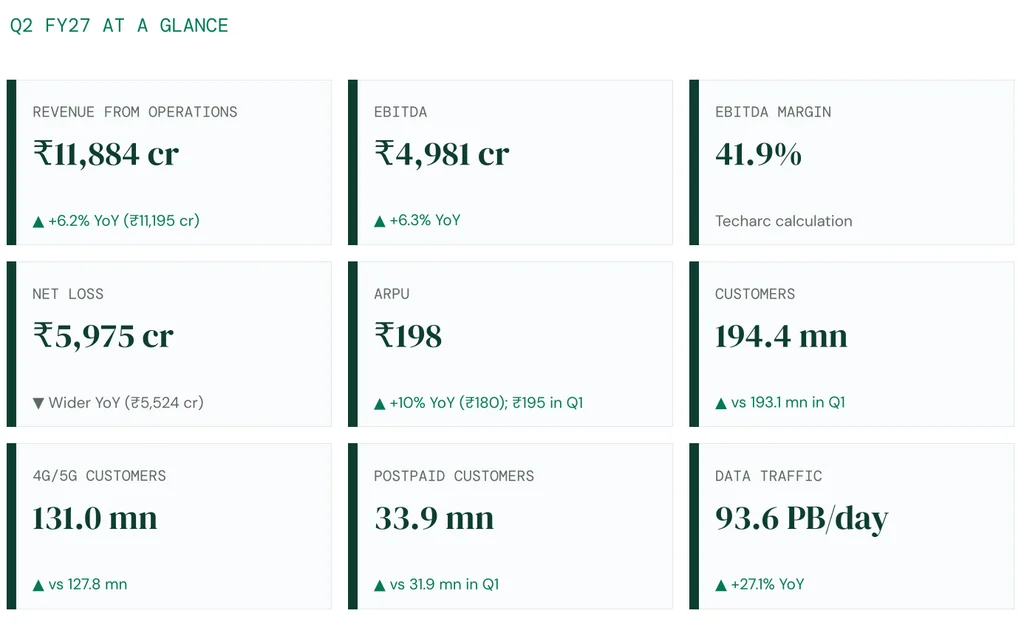
Vodafone Idea (Vi) reported Q2 FY27 (Jul–Sep 2026) on 12 Nov 2026. Revenue and ARPU grew, the customer base edged up, but the net loss widened to ₹5,975 cr.
What the numbers say
The subscriber bleed has stopped, at least for now. Vi added 1.3 mn customers in the quarter. Per Business Standard, this is its first six months of net additions since the 2018 merger. The mix is also improving: 4G/5G customers rose 3.2 mn to 131.0 mn, and postpaid grew 6.3% in a quarter.
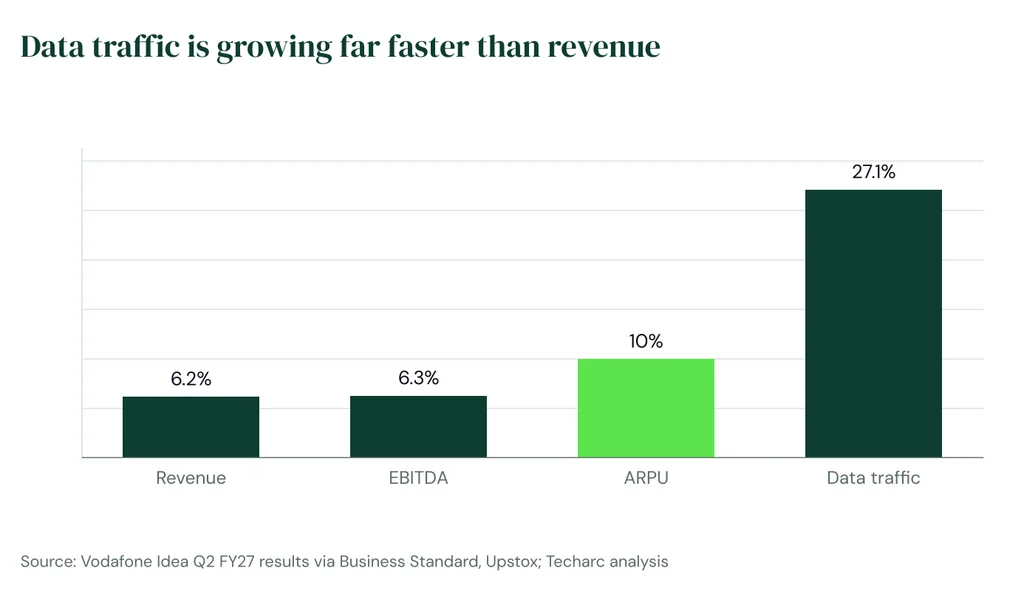
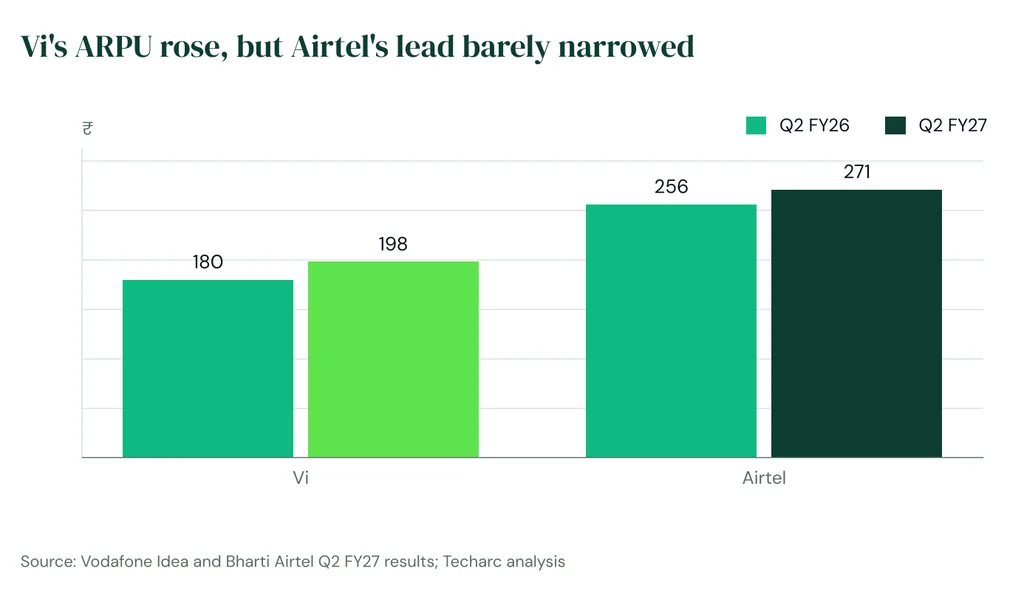
ARPU rose 10% YoY to ₹198, the fastest growth among the three operators. But it moved only ₹3 from Q1. Most of the YoY gain still comes from the July 2024 tariff reset and the shift of users to 4G/5G, not from new pricing.
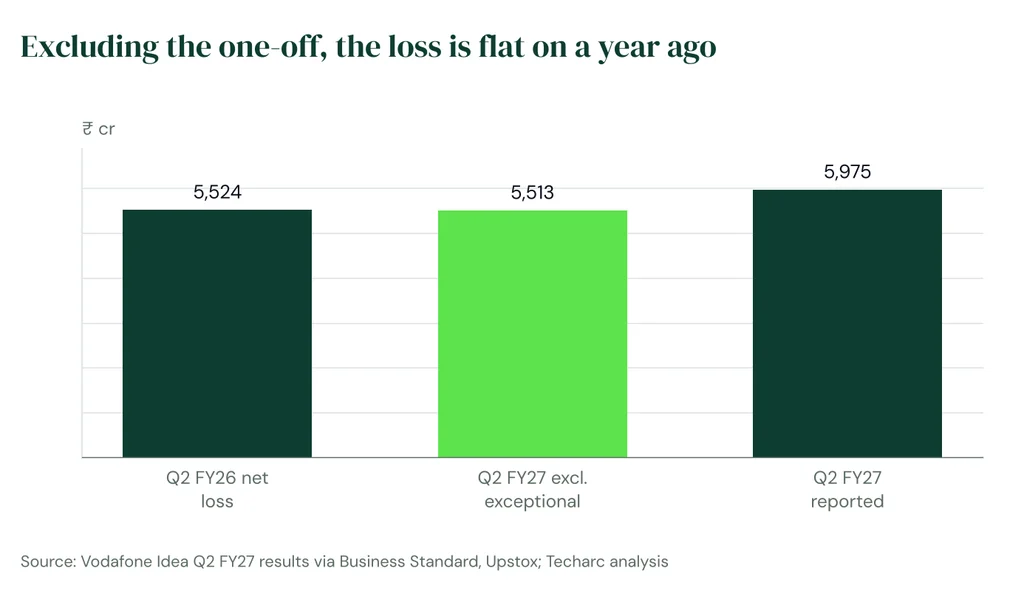
The loss is the problem. EBITDA of ₹4,981 cr does not cover interest and depreciation on a large debt and spectrum load. Even excluding the ₹462 cr exceptional loss on Vodafone Plc shares, the loss is about ₹5,513 cr. That is roughly where the reported loss stood a year ago (₹5,524 cr).
Funding is moving. Vi secured over ₹10,500 cr in H1, including over ₹4,000 cr of bank funding in Q2. It has placed over ₹13,200 cr of capex orders and executed about ₹6,000 cr. 5G now covers 400 cities and towns across its 17 spectrum circles.
Industry read: two strong operators and a stable third
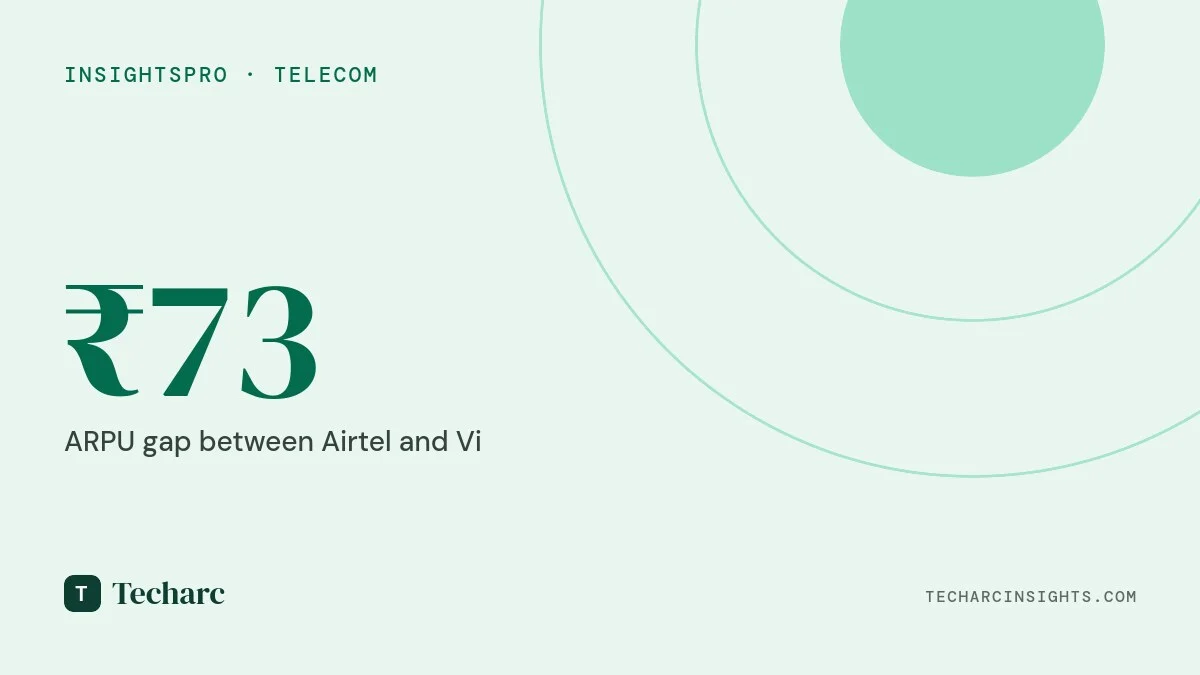
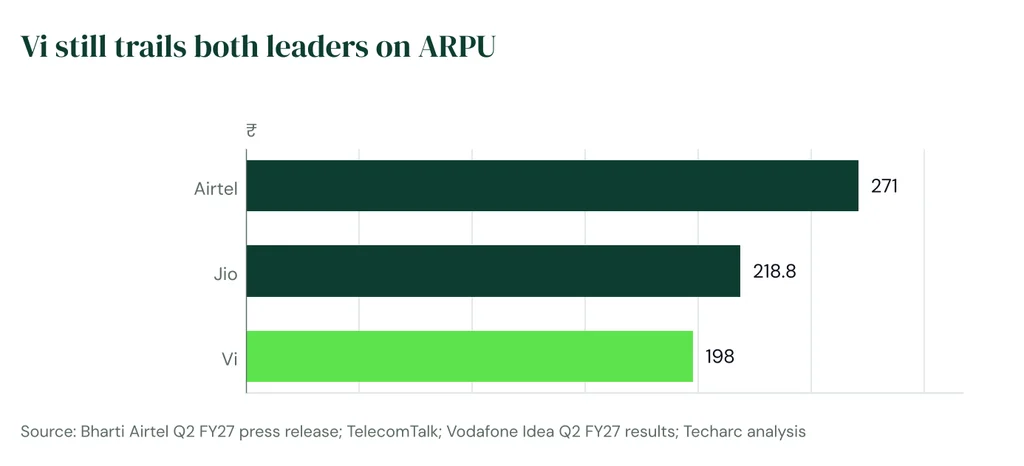
The gap to the leaders is not closing. Airtel’s mobile ARPU was ₹271 in Q2 FY27, ₹73 above Vi. A year ago the gap was ₹76 (₹256 vs ₹180). Jio’s ARPU was ₹218.8, about ₹21 above Vi.
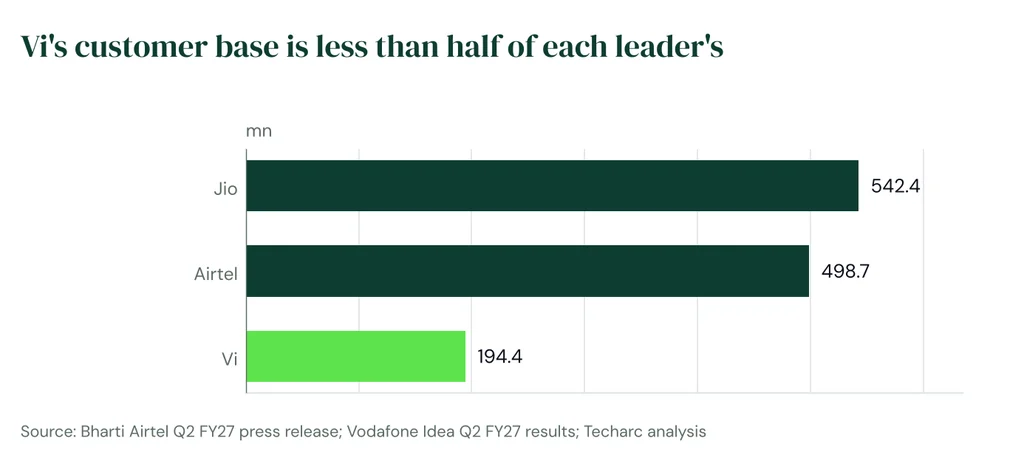
Scale tells the same story. Airtel has 498.7 mn India customers and Jio 542.4 mn, with 300 mn on 5G. Jio added 9.1 mn customers in the quarter; Vi added 1.3 mn. Vi is no longer shrinking, but the two leaders keep pulling away on volume.
Pricing power sits with the leaders too. Airtel raised all six postpaid plans by ₹50 from 8 Oct 2026, a 3–11% rise. Q3 will show whether Vi follows. Its postpaid base grew fast in Q2, so a hike there carries churn risk.
Techarc view
India is settling into two strong operators and a weak but surviving third. Vi has moved from crisis to stability. That matters: a viable third operator keeps pricing discipline honest and gives enterprises and handset makers a third network partner.
The biggest threat has eased. The DoT has reassessed Vi’s AGR dues to ₹64,046 cr, down from ₹87,695 cr. Most payments start only in FY32 and run to FY41. That gives Vi a five-year window to fix the business, not a permanent cure.
Stability alone will not close a ₹73 ARPU gap. Vi needs three things together: a tariff hike it can lead or follow quickly, the full ₹25,000–35,000 cr bank funding it is seeking, and 5G scale beyond 400 towns. Without 5G depth, its best customers stay exposed to Airtel and Jio.
What to watch:
- Whether Vi matches Airtel’s ₹50 postpaid hike in Q3, and its churn after.
- Closure of the bank funding round and how much reaches capex.
- 5G footprint and 4G/5G base growth, against Jio’s 300 mn 5G users.
- Whether net additions hold for a third straight quarter.
Sources
- Business Standard: Vi Q2 loss widens to ₹5,975 crore
- Upstox: Vi Q2 results, key numbers
- Bharti Airtel Q2 FY27 press release
- TelecomTalk: Jio ARPU rises to ₹218.8
- Onmanorama: Airtel hikes all postpaid plans by ₹50
- Angel One: Vi AGR dues finalised at ₹64,046 crore
- Outlook Business: Vi AGR dues frozen, payment schedule
ABOUT TECHARC
Techarc is an independent technology market research, analytics, and consulting firm based in India, covering consumer devices, telecom, autotech, and the e-commerce/D2C ecosystem across three pillars: Analytics, Research, and Consulting.
