
The India Mobile Congress 2026 comes to an end. Every edition of the IMC reflects where technology is headed. This year, the message was hard to miss. The world of technology is moving from smart and connected to intelligent, and in practice, that means everything AI. From connected to intelligent For the past two decades, […]
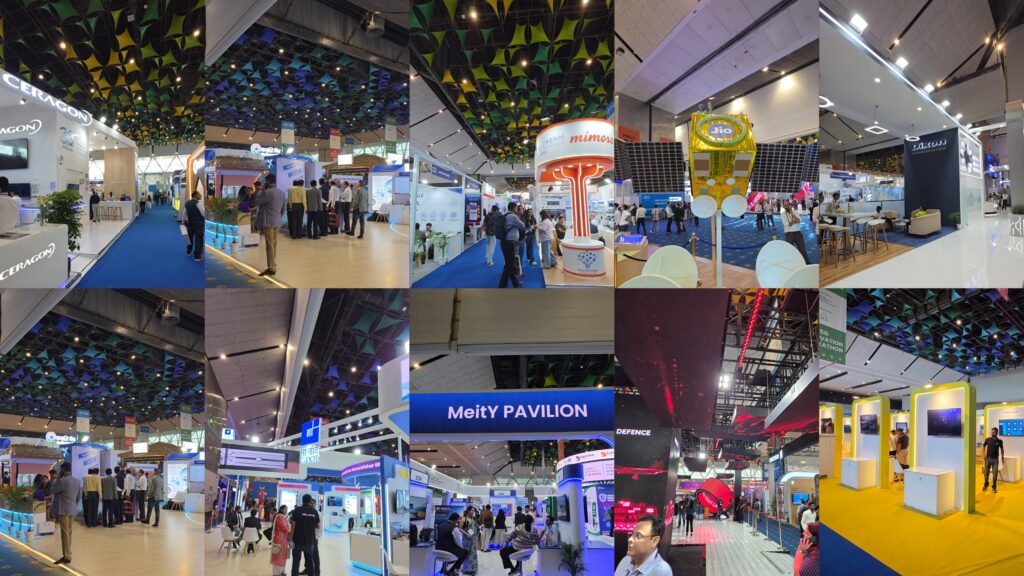
The India Mobile Congress 2026 comes to an end. Every edition of the IMC reflects where technology is headed. This year, the message was hard to miss. The world of technology is moving from smart and connected to intelligent, and in practice, that means everything AI.
For the past two decades, the industry’s story has been about connectivity. Getting people, devices and things online, and making them smarter along the way. That chapter is not over, but it is no longer the headline. The conversation on the floor at IMC 2026 was about intelligence as the defining layer of every product, network and service.
Telecommunications is no exception. The sector is at the threshold of an AI-led transformation that goes right up to the core. Intelligence is moving beyond customer-facing applications such as chatbots and personalised plans, and into how networks are planned, operated, optimised and secured. The network is gradually shifting from something that is managed to something that manages itself. For an industry that has always competed on scale and reliability, this is a fundamental rethink of what a network is.
What stood out this year was the sheer quality of demonstrations across the halls. Technology giants showcased what their platforms can do, and startups, sprouting in numbers, showed what they are building from the ground up. The energy was not about who was selling the most. Rather, it was about who was creating something new.
This matters because it signals a shift in India’s role. India’s participation in the creation of technology, not only its consumption, is clearly on the rise. The ecosystem is moving from being the world’s largest market to being a serious contributor to what the world will use next.
This is precisely what also came out of the Viksit Tech 47, the spotlight programme of India Mobile Congress in association with Techarc.
We captured many of these demos and booth walkthroughs, and we will keep sharing them on Techarc’s social channels. Do follow along for the updates.
Before looking ahead, it is worth acknowledging what has been achieved. India has democratised technology at scale, particularly digital technology. This is not a theoretical case study or a policy aspiration. It is established by outcomes. There are hundreds of millions of people transacting digitally, accessing services and participating in the economy through technology that was designed to be affordable, interoperable and inclusive.
That success was not an accident. It came from a deliberate approach of building public digital infrastructure, keeping costs low and enabling an ecosystem to innovate on top. It is India’s calling card, and rightly so.
Which brings us to the question that IMC 2026 left us with. If the last decade was about democratising technology, the next decade is about democratising intelligence.
The journey from demos to democratisation will not be easy. A spectacular demo at a booth is one thing. Intelligence that works reliably for a farmer in Vidarbha, a shopkeeper in Srinagar or a student in a small town in Odisha is quite another. Crossing that gap, from showcasing capability to delivering it at population scale, is the challenge India needs to embrace over the next ten years.
Here, I believe the definition of democratisation itself has to change. In the digital era, democratisation was largely defined by affordability – bring the cost down and the masses will come. That will remain necessary, but it will not be sufficient for intelligence.
Democratising intelligence has to mean intelligence of India, by India and for India. Of India, because it must be grounded in our languages, contexts, data and realities. By India, because we must have the capability to build and own this layer rather than simply rent it. For India, because it must be designed around the needs and aspirations of Indians, not adapted as an afterthought. This is a paradigm shift, and it will have to be brought about collectively, by industry, government, academia and startups together.
The conclusion follows naturally. An intelligence-driven economy is the future, and in such an economy, global innovations and use cases cannot simply be retrofitted into India. The diversity, scale and complexity of our needs are too distinct for that to work.
We will have to create and deploy this layer on our own. That does not mean building in isolation. We should draw inspiration from other ecosystems and collaborate with the global community wherever it is unavoidable. But the centre of gravity must be here. We must be in control of things.
India has done this before. It looked at the world’s digital playbook, took what was useful, and built something of its own that the world now studies. The task now is to do the same for intelligence, and IMC 2026 suggests the ingredients are in place. What we need next is the resolve to turn demos into deployment, and deployment into democratisation.

The weekly read on where technology is heading — 75,000+ subscribers across the industry.
Questions about our reports, dashboards, InsightsPro or a custom engagement? Send a note and the team will get back to you.