
From January through July 2026, average smartphone prices climbed 10.5%, a sharp reversal from last year’s near-flat market. But the pain isn’t shared equally. Month-on-month price velocity has multiplied, and 158 models have risen meaningfully versus just 35 that have fallen. The increase is landing hardest on the Entry and Base segments; the segments first-time […]
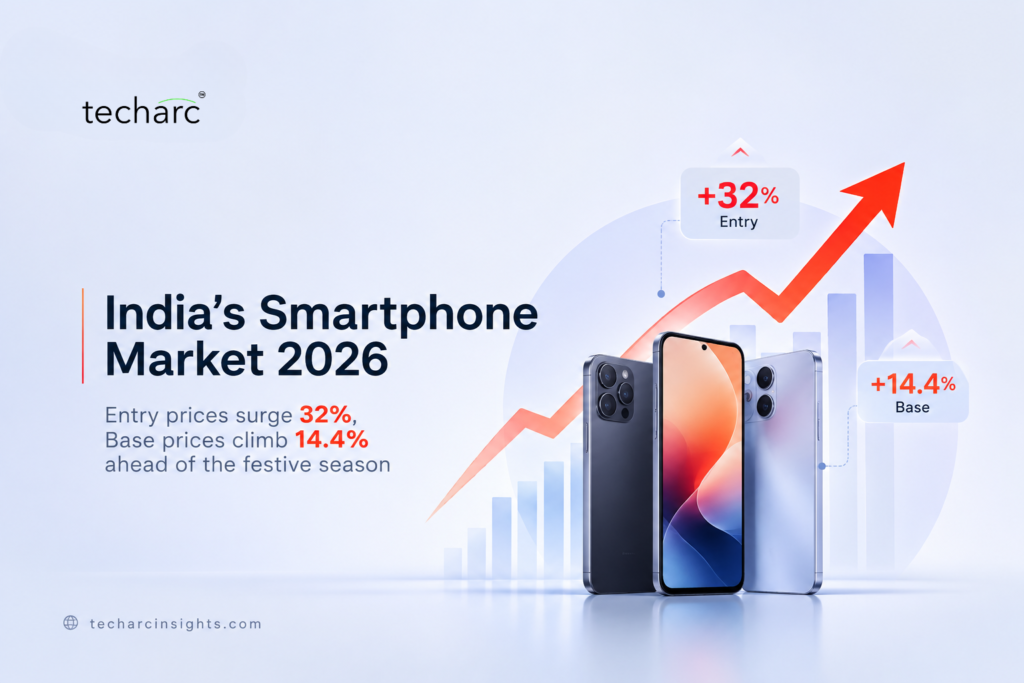
From January through July 2026, average smartphone prices climbed 10.5%, a sharp reversal from last year’s near-flat market. But the pain isn’t shared equally. Month-on-month price velocity has multiplied, and 158 models have risen meaningfully versus just 35 that have fallen.
The increase is landing hardest on the Entry and Base segments; the segments first-time buyers and budget shoppers rely on most. Entry phones have surged roughly 32% since launch, and Base phones at 14.4%, far outpacing the mid-range, where the price increase has been moderate. Premium Pro has barely moved, and Luxe has gotten cheaper.
That divide matters right now because it’s colliding with the festive season, the biggest volume window of the year, landing squarely on the segments already under the most price pressure.
This analysis walks through how the market got here, why Entry and Base phones are bearing the brunt of it, and what it likely means for budget shoppers and brands over the next few months of sales.
Key takeaway
Entry and Base segments are very critical to widening the smartphone base in the country. The festive season has been historically offering great deals and discounts, increasing the affordability and accessibility of smartphones for hyper price sensitive segments, essentially the lower segments of the pyramid. Net effect it means that the featurephone to smartphone switch gets further delayed.
A Year Apart, A Widening Gap
The contrast between the two years is stark. In 2025, smartphone pricing was broadly stable, with prices moving less than a percentage point on average and price increases and declines roughly balanced across the market.
In 2026, that balance has shifted decisively upward. The average price change has reached +10.5% between January and July, and the number of models rising by more than 3% has more than tripled to 158, compared with only 35 recording declines of that size. The month-on-month trend also shows real volatility through the year, with the sharpest price movements coming in the early months of 2026.
The broader takeaway is that 2025 was a relatively stable pricing year. 2026, so far, has seen a much stronger and more widespread upward movement in smartphone prices.
The Culprit: A Global Memory-Chip Squeeze
The shift isn’t random. The single biggest factor behind it is a global spike in memory-chip costs — the DRAM and NAND flash that go into every phone — and it’s hitting budget segment hardest.
Every phone needs two kinds of memory: RAM to run apps smoothly, and storage to hold photos, apps, and the operating system. Both have gotten much more expensive for phone makers.
This matters more for cheaper phones than expensive ones. On a flagship, memory is a small slice of a much bigger bill of materials that includes premium cameras, displays, and processors. On an entry-level phone, memory can make up a much larger share of the total cost, so the increase in chip prices moves the needle far more on a budget phone’s price tag than on a premium one. That’s the core reason Entry and Base segments are absorbing most of the increase this year.
Where It Hurts Most: Entry and Base segments
The increase isn’t evenly distributed across price segments. Entry and Base phones are rising fastest; the higher up the price ladder you go, the smaller the increase, until it turns into a decline at the very top.
What This Looks Like in Rupees
The percentages are easier to feel with an actual price tag attached. Take a Base-segment phone: the roughly 14.4% average increase in that segment plays out like this:
That’s an extra ₹2,000–₹3,000 for the same phone in the same segment before any festive discount is applied. Entry-segment phones are rising even faster in percentage terms, averaging 32%, though because they start from a lower base price, the rupee impact per phone can land in a similar range rather than necessarily exceeding it.
What This Means for the Festive Season
This trend collides directly with the calendar. Festive season sales are typically where Indian smartphone brands move the most volume, around half of the sales come from the Entry and Base segment— exactly the segment that have risen roughly 32% and 14.4% respectively since launch. A few consequences follow from that overlap:
The Conclusion
The data through July 2026 confirms a clear shift in India’s smartphone pricing trend. 2025 was broadly flat; January–July 2026 has been defined by broad price increases, led by the Entry and Base segment that festive-season buyers rely on. Meanwhile, Premium Pro has stayed largely stable and Luxe pricing has declined, so the market is becoming more uneven, not just more expensive.
The question worth watching this festive season isn’t whether there will be sales — there always are. It’s whether the discounts on offer are big enough to offset the price increases that have already built up through 2026. If Entry and Base prices keep climbing even through the biggest buying window of the year, the “wait for a discount” strategy may need retiring for good.
The Net Effective Pricing (NEP) may not be Net Exciting Pricing this festive season.
Want to track these pricing shifts as they happen? Explore the live India Smartphone Pricing Trends dashboard
:

The weekly read on where technology is heading — 75,000+ subscribers across the industry.
Questions about our reports, dashboards, InsightsPro or a custom engagement? Send a note and the team will get back to you.